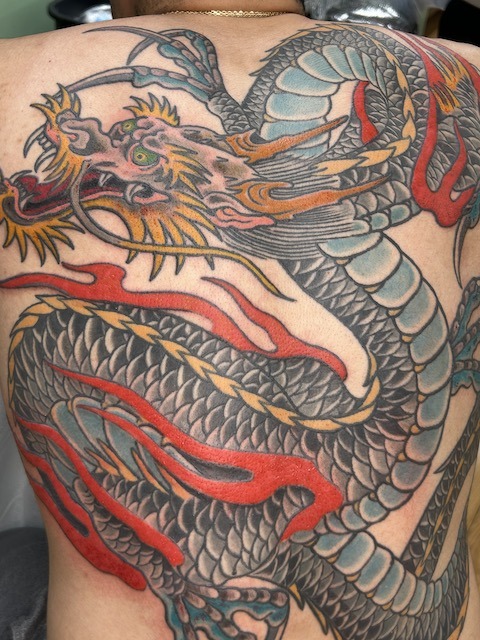
, the almighty supernatural creature whose body in Eastern lore is born of the stormy waters. He or “it” may be seen in crashing waves or swirling clouds, wearing flames of fire on his legs or in harmony with dangerous flashes of lightning, he is a creature to behold. Almost always wearing a fierce expression, it’s hard not to be taken aback, catching your breath while beholding it’s majesty and aggressive demeanor. All of this make the dragon one of the most impressive tattoos, and make it a natural protection element. If you have the room, put him on your back. If you are slightly obsessed like I am, get more than one tattoo of a dragon.
The Rising Dragon, the eponymous dragon of my studio. This creature is somewhat like the Koi, seeking perfection, he blazes in energy in passion, with the pearl of enlightenment and wisdom always slightly out of reach. For me he symbolizes the never ending quest to achieve goals. He can never rest because there is so much to learn. In this lifetime, very few of us can reach enlightenment like the Buddha, but we can try.
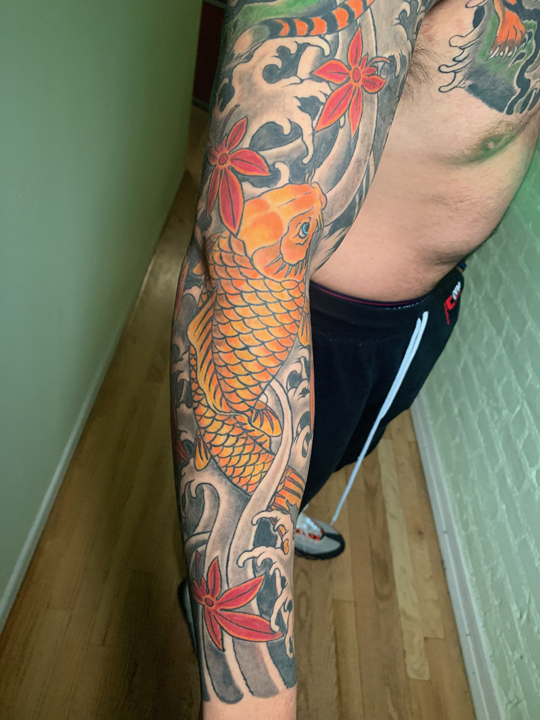
The Koi: most definitely not just a kind of fish! The koi is a strong scaled being who is resilient to harsh weather, life’s challenges, the steps to reaching an ambitious destination. In real life kois in ponds across the word survive freezing temperatures during the winter months, at the bottom of the water in a hibernation state. In legends, they leap like salmon through sharp rocks and roiling waters to reach their destination: the dragon gate. The gate is a Torii temple arch, after they pass through it, transforms them into a dragon.
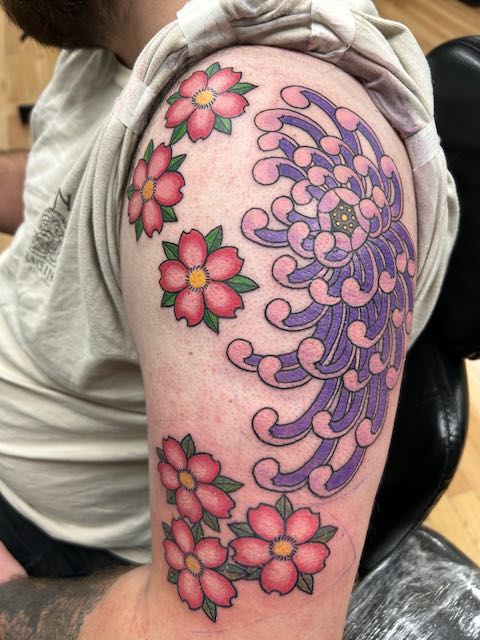
The Cherry Blossom “Sakura” Tattoo
is the smallest prettiest flower for it’s size, and used to celebrate Spring. Like all flowers though, it has a short life span, so it can be used to remind us that life is beautiful but fleeting. Some samurais would wear the cherry blossom as a reminder that life is short, so glory on the battlefield is intrinsic in the culture.
Chrysanthemum Tattoos
The Chrysanthemum is known as KIKU in Japanese, and symbolizes Longevity, Rejuvenation, Nobility and Prosperity. The 16-petaled Chrysanthemum is the official crest of the Japanese Emperor and can be found on Japanese Passports. An extremely beautiful flower is comes in many shapes, colors and sizes with some of the petal making long swoops that can be interpreted very liberally in decorative art.
IREZUMI
Irezumi means to “push ink” the actual action of doing so. The ink itself can be bought as “Sumi”. The term first used in Japan, the Edo period, the peaceful period. Criminals were marked on their arms or foreheads with Kanji related to their crimes, 1603-1868. Because this lasted for so long, many of the older generations are still very repulsed by tattoos, and will treat you that way.
TEBORI
Tebori is more like the art of making tattoos. An elevated way of describing Irezumi, it is highly ritualized by the masters, with specific tools being crafted to push in the ink by hand. Although in modern times, most outlines will be done by machine, but the shading and coloring will be done with hand tools, and handmade needles fitted to metal or wooden handles.
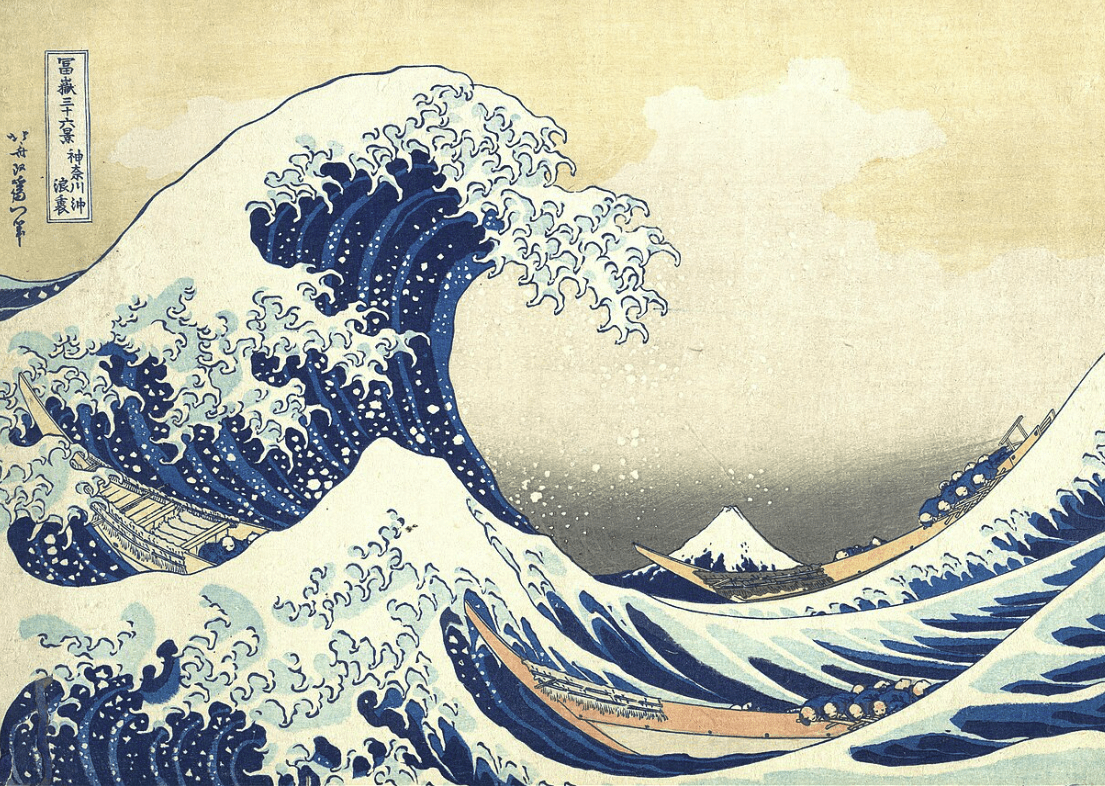
Ukiyo-e
Ukiyo-e, are pictures of the Floating world, The term ukiyo originally expressed the Buddhist idea of life as sorrowful, transient, and fleeting. During the peaceful Edo period, it shifted to mean living in the moment, enjoying present pleasures, and embracing the entertainment of city life produced using woodblock carving, watercolors palette. The art that flourished from the 17th to 19th centuries. Edo also known as Tokyo was the seat of the Tokugawa Shogunate that had successfully unified Japan. As a result Japan had almost 300 full years of peace in which many arts were perfected. Some notable Ukiyo artists being Hokusai, Hiroshige. These art pieces greatly influence the way tattoo artists stylize elements and background of large works. The wave of Kaganawa responsible for the finger-wave treatment tattoo artists draw their water.